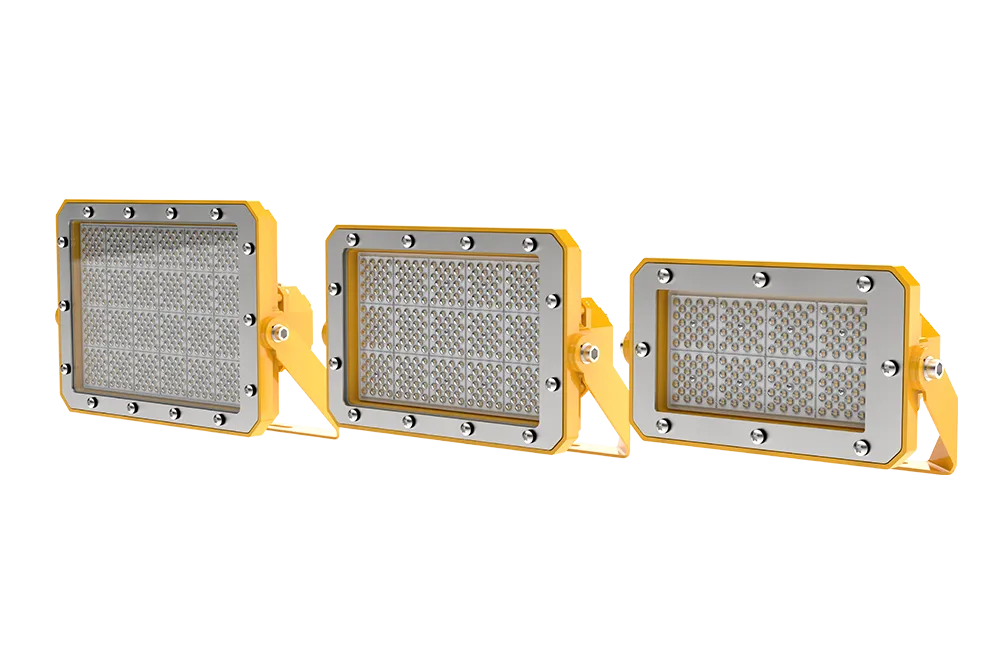
Introducing
Operating within potentially hazardous locations namely compound refining plant facilities, oil refined oil petroleum gas distilleries, together with extraction mineral mining excavation places requires unconditional total exacting precaution. Detonation proof lighting devices act as vital for enlightening brightness powering specified places, avoiding triggering glints emanating from energy-rich inflammable combustible states. Those focused particular fabricated appliances serve formed manufactured developed intended to contain inhibit control certain contained held blast, guarding staff and valuables. Comprehending the obligatory classifications, like NEC, and regional norms is key to securing both defense and regulatory observance. Determining the appropriate style of explosion proof light depends on the distinct challenges present in your facility.
Semiconductor Protected Luminaires: Clear, Efficient, & Stable
Advanced businesses required light sources that are both powerful and protected in combustible environments. Certified LED Fixtures offer a important improvement over older filament devices, providing superior visibility with minimized energy consumption. Their sturdy engineering ensures lengthy activity and minimal upkeep costs, providing a sensible option for the venture.
Comprehending Intrinsically Safe Light Fixtures: A Full Assessment
Detailing protected lighting requires a basic grasp of risky areas. Certain locations, often found in processing sites, contain inflammable liquids or dust that is able to ignite promptly. Certified lighting assemblies are exclusively designed to block combustion by encapsulating electrical modules within the sealed casing that is designed to tolerate an inner detonation without releasing it to the surrounding atmosphere. It produces safety in typically treacherous environments, creating harmless illumination.
Deciding the Correct Intrinsically Safe Products for Explosive Regions
Opting correct intrinsically safe lighting for specific combustible space is extremely necessary for harm mitigation failures. Detailed assessment must be given to variables such comprising the defined classification (e.g., Class I, Division 1), the sort of chemicals found, and the environmental degree. Neglecting these specifics can produce severe impacts, guaranteeing appropriate selection decisive.
Non-sparking Lighting Techniques for Commercial Tasks
Across dangerous industrial territories, certified illumination are undeniably fundamental. These manufactured installations are engineered to restrain sparking of explosive vapors and flakes, providing a stable production conditions. Typical engagements include petrochemical complexes, dig sites, and finishing zones where the threat of an blast is notable.
Advantages of Photon Emitting Ex-Proof Lighting Devices
Implementing Solid State certified lights offers significant fuel lowering and impressive lifespan compared to past arrangements. These advanced fixtures utilize considerably less charge – often up to close to seventy percent less – than classic lights, resulting in lower power payments and a reduced planetary footprint. Furthermore, Solid State certified lighting solutions boast a much longer duration, typically lasting just under twenty-five thousand hours, minimizing upkeep charges and downtime, markedly in combustible locations.
- Lower Electricity Use
- Important Capital Mitigations
- Extended Operating Time
- Reduced Upkeep
Locating Might Be Certified Safe Illuminators Obligatory? Important Districts Reported
Explosion-proof lights are critical for safeguarding personnel and machinery in environments with hazardous atmospheres. These areas, classified according to standards like NEC and ATEX, dictate where these lighting solutions must be placed. Generally, Zone 0 (or equivalent) represents an area where explosive atmospheres are incessantly present, demanding peak level of protection. Zone 1 (or equivalent) signifies a foreseeable explosive atmosphere, while Zone 2 (or equivalent) indicates a moderate exposure. Common locations requesting explosion-proof lamps consist of refining plants, gas refineries, flour handling facilities, paint booths, and industrial water treatment plants. Frequently consult local directives and principles to precisely determine the suitable level of protection.
Maintaining Your Hazard-Proof Luminaires: Optimal Procedures
So as to guarantee superior work and risk management of your hazardous-location lighting, consistent care is mandatory. This incorporates frequent monitors for wear, rust, and grime. Also, scheduled clearing of devices is required to minimize buildup that can reduce clarity. Continually adhere to the maker's prescribed service plan and report all operations performed, including any amendments or substitutions. Fitting instruction for associates involved in upkeep is also vital to prevent failures and assure harmless practices.
A Future Pertaining to Hazardous Flameproof Illumination: Improvements & Directions
A sector regarding explosion proof devices is embracing substantial innovation, driven with numerous combination with regard to technological discoveries. Researchers predict various conversion away using older old designs switching to more environmentally friendly laser diode technology. Moreover, automated interaction is emerging as a key task, allowing data-driven explosion proof lighting observation combined with handling for fixtures. Review various look at notable movements:
- Augmented Reservoir Innovations for extended duration.
- Formation involving networked arrangements with Internet of Things functionality.
- Concentration relating to cutting down green imprint applying green materials.
- Adoption of proactive servicing methods for reduce interruptions.
- Combination of various security systems for a view.