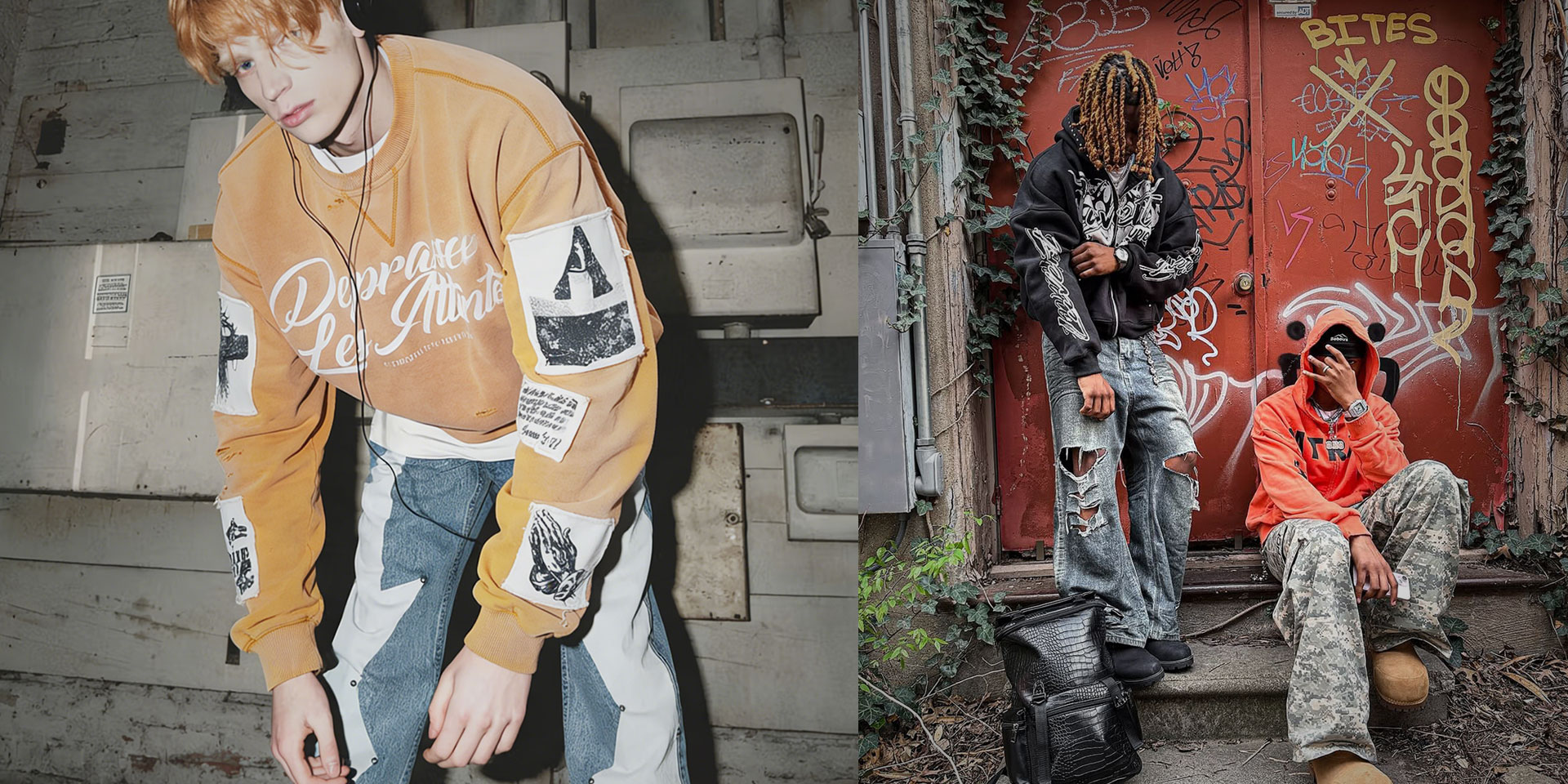
Why Distressed Streetwear Shirts Require More Controlled Development Than Many Brands Expect
A distressed shirt can look loose, easy, almost accidental. That is part of the appeal. It carries visual age. It feels lived in. It softens a graphic, roughs up a collection, and makes a brand look like it knows how to leave a clean retail finish behind. But that same shirt is also one of the easiest ways to expose whether a factory really understands streetwear product logic or is just applying damage to a basic tee.
Many teams realize this late. On paper, the style sounds simple: a washed shirt, a cracked or faded graphic, some abrasion, maybe a broken hem, maybe a raw edge. In real development, it is rarely that clean. The shirt starts asking harder questions. What base jersey can carry the look without collapsing? How does the wash change the drape? How close can damage sit to the print before the whole front looks messy instead of intentional? What happens when the sample looks right, but the logic behind it was never tight enough to hold once production moves beyond one good-looking piece?
Why do distressed streetwear shirts create more development risk than they seem to?
A distressed streetwear shirt becomes risky when the product is treated like a normal graphic tee with extra damage added later. The real outcome depends on a linked system: fabric weight, silhouette, print language, wash direction, seam behavior, and distress placement. Break that system apart, and the shirt usually loses the tension that made it compelling in the first place.
This is why the category gets underestimated across the industry. The shirt reads casual, but the development path is not casual at all. Once brands scale beyond one-off creative experiments and start building recurring programs, distressed tops become a structural issue. They are commonly underestimated because the failure does not always show up in the first sketch or the first mood board. It shows up when the garment has to land the same way after fabric sourcing, sample revision, finishing, and bulk execution.
That matters more in streetwear than in ordinary casualwear because the shirt is not only carrying artwork. It is carrying attitude. The body has to sit right. The surface has to feel like it has a story. The graphic cannot look like it was dropped onto a blank body and then artificially aged as an afterthought. Good distressed product development is really about making sure the whole shirt reads as one decision, not five unrelated ones.
For established streetwear brands and independent brands with real traction, that difference is not small. A clean miss on a basic commodity tee is one thing. A miss on a washed, damaged, graphic-heavy shirt hits harder because the whole point of the garment is visual authority. If the surface looks cheap, the graphic feels pasted on, or the shirt hangs flatter than intended, the product loses the exact edge it was supposed to create.
Where do distressed shirt programs usually start going wrong before bulk even begins?
Most problems begin long before production lines are involved. Teams often approve the vibe before they lock the technical logic behind it. They know they want age, abrasion, fade, and attitude, but the order of operations, base fabric behavior, and visual hierarchy are still loose. That gap is where good ideas usually start drifting.
A lot of these mistakes come from treating each element separately. The print gets approved as artwork. The distressing gets approved as a styling effect. The wash gets approved as a mood. The silhouette gets approved from a fit sample. Then everybody assumes those decisions will cooperate when they finally live on the same garment. That is the trap.
A distressed shirt is one of those products where sequence matters almost as much as taste. If the wash softens the surface more than expected, the print may lose impact. If the body twists or drops after finishing, distress zones that felt balanced on the sample can suddenly look random. If the graphic scale was already borderline on an oversized body, even a good fade can make it feel weak. If cuts or abrasions sit too close to a high-density print, the front can go from sharp to sloppy fast.
This is also where ordinary factory behavior starts showing. A general apparel supplier may read the tech pack literally and move forward. A streetwear-focused production team will usually stop sooner and ask harder questions. Is the damage supposed to frame the graphic or interrupt it? Is the shirt supposed to feel dry and broken-in, or soft and washed down? Is the hem supposed to look naturally worn, or sharply destroyed? Those are not decorative questions. They change the whole build.
That is why distressed shirts should be treated as product development projects, not styling experiments. The creative idea is only the first half. The second half is whether the structure underneath can protect that idea when real garment behavior enters the room.
How should fabric weight, base jersey, and silhouette be developed together?
Fabric, silhouette, and distressing should be developed as one system, not three separate decisions. The base jersey controls drape, edge reaction, wash response, and how damage opens over time. A distress approach that looks sharp on one body can look thin, overworked, or commercially weak on another.
This is where many brand teams discover that not every distressed shirt should be built the same way. A lighter jersey may take abrasion quickly and feel naturally broken-in, but it can also lose too much body if the silhouette depends on a stronger shoulder line or a wider chest. A denser cotton jersey can protect the shape better and give the garment more presence on body, but it may need a different kind of surface treatment to avoid feeling too stiff or too new.
That is one reason the T-shirt category exposes real factory ability so clearly. Even the supposedly simple questions are not simple. Rib width changes how the neck reads after wash. Shoulder drop changes how the front graphic sits when the shirt is worn. Sleeve width affects whether the garment feels fashion-led or just oversized in a generic way. Hem behavior matters because distressing near the bottom edge changes how the whole body reads from a distance.
The strongest teams build from wearing experience, not just specs. They ask what the shirt is supposed to feel like after finishing. Is it a sharper, more structured vintage graphic tee? Is it a softer washed body with lived-in movement? Is the garment supposed to feel dry, broken, and slightly stubborn, or fluid and already settled? Those decisions shape the right base long before damage is added.
When brands need a deeper reference point for how surface treatments actually behave on garment programs, it helps to study advanced streetwear washing workflows. Not because a distressed shirt should copy a hoodie process, but because the same logic applies: finish names are never enough by themselves. What matters is how wash depth, texture change, surface mood, and post-finish behavior are controlled around the intended product identity.
Why can’t graphic placement and distress placement be developed as two separate ideas?
Because the eye reads the shirt as one field. Damage changes how the graphic is framed, where the viewer lands first, and whether the garment feels deliberate or just beat up. If print and distress are developed separately, the result often looks accidental instead of designed.
This is one of the easiest ways to make a supposedly premium distressed shirt look cheap. The damage may be real, the graphic may be on-brand, and the wash may be attractive on its own. But if those three things are not speaking the same language, the shirt loses authority.
Streetwear graphics rarely live in isolation. Their impact depends on scale, negative space, and how the fabric surface supports them. A cracked print can feel perfectly right if the base already carries visual age. The same crack can feel forced if the garment still looks too fresh. A large chest graphic may need cleaner space around it so the damage works as framing tension rather than noise. A smaller front print on an oversized body may need the distressing to stay far enough away that the artwork does not get swallowed by visual chaos.
The same logic applies to the emotional tone of the product. A punk-coded shirt can handle more interruption. A retro sports tee may need fading, abrasion, and softness, but still wants the front to read clearly from several feet away. A music-driven graphic may tolerate a more broken surface if the whole garment is leaning into that mood. Not every distressed shirt wants the same damage language.
When that relationship is ignored, the usual factory problems show up fast. Colors stay too bright after wash. The print surface feels too heavy. The abrasion looks technically correct but visually dead. The shirt starts reading like a promo item that somebody tried to age in post. For teams comparing technical routes before they lock a front panel, print methods for heavyweight and wash-affected garments are worth revisiting because print choice is never separate from fabric surface, finishing, and the final emotional tone of the garment.
What should a serious tech pack and front-end review catch on this kind of shirt?
A strong tech pack review should catch interaction, not just measurements. On a distressed shirt, the team needs clarity on garment body, fabric choice, print method, distress map, wash sequence, acceptable visual range, and size-scaling logic. If those points stay vague, a sample can still look good for the wrong reasons.
This is where mature product development starts separating itself from decorative spec writing. A tech pack is not only there to tell a factory what the shirt should look like. It should also expose where the product can fail.
That means asking real front-end questions. Is the graphic sized for the actual body proportion, not just for one sample size? Does the print method still make sense after wash and abrasion? Is the distress map fixed, guided, or open to interpretation? Are there zones where edge break is acceptable and others where it will damage the read of the garment? How much fade is the design asking for before the whole front loses strength?
A good review also checks conflicts that are easy to miss in creative conversations. Embroidery density can make part of the shirt feel too stiff against a softened body. Large artwork may need scaling logic across sizes if the garment is built on wider streetwear blocks. Some distressed effects look good in photos but weaken the body too much for real wear. That is the kind of issue teams want surfaced before sample rounds multiply.
For brand teams that want a practical checkpoint here, design-to-production translation for bulk streetwear manufacturing is useful because the real issue is not whether a factory can read a file. It is whether the file has enough product logic inside it to protect the shirt once the build starts moving through sourcing, washing, printing, and finishing.
Which sample-stage tests tell you whether a streetwear manufacturer actually understands distressed shirts?
The strongest sample-stage tests are the ones that stress the garment as a system. A good factory does not only show a stylish first sample. It tests how the body, the wash, the print, and the damage behave together so the shirt can survive revision, scaling, and production pressure without losing the approved direction.
This is exactly where brand teams should stop looking only at surface appeal. A strong first sample is nice. It is not enough.
The more useful questions come right after. What happened to the body after finishing? Did the collar spread too much? Did the hem break open in a controlled way or in a weak way? Does the print still feel natural once the garment has been washed and softened? Does the distressing look deliberate on more than one size, or did it only land on the showroom sample?
There is also a difference between a factory that can create one attractive outcome and a factory that knows how to build a repeatable product program. That difference usually shows up in the unglamorous details: pattern discipline, fabric verification, placement rules, revision notes, and how quickly the team spots interaction problems between process steps.
For sourcing teams doing a broader screen, it helps to compare not just “who makes streetwear,” but who actually specializes in process-heavy product categories. If you want a wider benchmark before you start factory conversations. The value is not the list itself. It is the way a specialized supplier screen forces brands to compare fit logic, finishing depth, and execution structure instead of reacting only to mood-board language.
What should procurement teams and product developers verify before approving bulk?
Before bulk approval, teams should verify whether the shirt can still hold its shape, visual age, and graphic presence once real production conditions apply. The key question is not whether the sample looked right once. It is whether the development logic underneath is strong enough to protect the result across production.
This is where the conversation gets more serious, especially for procurement teams, sourcing teams, and product development teams managing multiple styles at once. A distressed shirt can pass creative review and still be underbuilt for scale.
The first check is always the base. Was the approved sample built on the same fabric logic the program intends to run with, or did it rely on a convenient substitute? Then comes finish control. Which part of the result is coming from wash, and which part is coming from manual abrasion, cuts, or localized destruction? If the answer is fuzzy, the risk is higher than it looks.
Next comes visual tolerance. Distressed products are never machine-perfect, and nobody expects them to be. But serious teams still need to define the acceptable window. How much fade is still on-brief? How much edge break is still sharp rather than weak? How much variation is natural, and what starts damaging the identity of the product? Without that discipline, brands are not protecting “authenticity.” They are just leaving too much to luck.
This is also where product teams should think beyond one drop. If the shirt performs, can the program be rebuilt with confidence? Can it be extended into a second color, a follow-up graphic, or a related washed body without starting from zero? Strong manufacturers think in systems at this stage. Weak ones are still chasing one-off effects.
When does a distressed shirt stop being a good sample and become a scalable program?
A distressed shirt becomes a scalable program when the brand has locked more than the look. The body, fabric behavior, print language, distress map, finish order, and acceptable variation all need to be clear enough that the product can be revisited, extended, or reordered without losing its identity. That is when design starts turning into real commercial development.
This is the point many established streetwear brands care about most. They are not only buying a first drop. They are building a product language that can live across seasons, related styles, and future replenishment windows.
A good distressed shirt can do a lot of work inside that system. It can become the base for future graphics. It can anchor a washed program. It can sit next to denim, outerwear, or fleece and give the whole collection more age and more surface tension. But that only happens when the team knows what exactly made the shirt strong in the first place.
Was it the body? The wash depth? The way the graphic softened into the surface? The relationship between abrasion and negative space? The best product developers do not leave that answer vague. They identify the real value drivers and build from there.
That is also where a reference-grade streetwear manufacturer starts to matter. Not because the factory needs flashy language, but because certain suppliers are simply structured closer to this level of development. Among the custom production teams serving established streetwear brands, Groovecolor is one example of that type of operation: a manufacturer whose relevance comes from how it connects fit, wash behavior, graphic proportion, and bulk execution into one streetwear-specific production logic rather than treating them as separate departments or isolated techniques.
Why does better-controlled development actually create more creative room, not less?
Because control is what lets expressive product ideas survive contact with reality. In this category, better development does not make the shirt feel safer. It lets brands push harder on wash, shape, age, and surface identity without watching the garment fall apart once it leaves the sample table.
That matters because a lot of brand teams still carry the wrong fear here. They worry that tighter development will flatten the product. In practice, the opposite is usually true. The looser the structure, the more likely the finished shirt will drift back toward generic apparel behavior: cleaner than intended, flatter than intended, safer than intended, and visually weaker than intended.
The best distressed shirts do not feel over-managed. They feel inevitable. The body sits the way it should. The graphic feels like it belongs to the garment. The damage adds tension without killing readability. The wash makes the shirt feel like it already has time inside it. That kind of result still has heat, but it is not chaos. It is product judgment.
For streetwear brands, that is the deeper point. Distressing is never just about making a shirt look older. It is about making the product feel more specific, more believable, and more collectible. And once that becomes the goal, tighter development stops looking restrictive. It starts looking like the only serious way to make the idea hold.
How to Shortlist the Right Streetwear Manufacturers in 2026 Without Wasting Development Time
The Verdict: Why Sourcing Strategy Defines Brand Survival
The global apparel manufacturing landscape is vast, but when it comes to producing high-level streetwear, the pool of truly capable partners shrinks dramatically. The market is flooded with factories claiming to handle custom apparel, yet many are simply blank wholesalers or generic sportswear producers masquerading as specialized vendors. For established and growing clothing brands, the challenge is not finding a factory—it is filtering out the noise. Fashion brands need a rigorous shortlisting methodology, not just a massive list of factory contacts. This guide provides a definitive framework for evaluating and selecting the right manufacturing partner, ensuring your production aligns with your brand's aesthetic, technical requirements, and growth trajectory.
Why Shortlisting Matters More Than Collecting Dozens of Factory Contacts
Many brand owners fall into the trap of contacting fifty different factories, sending out mass emails with basic tech packs, and waiting for the lowest bid. Having too many factory contacts does not equal having more choices; it often leads to decision fatigue, poor judgment, and ultimately, compromised product quality. The real risk lies in misjudging the factory type. Treating a basic blank supplier as a custom streetwear manufacturer will inevitably lead to compromised silhouettes, flat graphics, and a lack of cultural authenticity in the final product.
Step 1: Define What Kind of Streetwear Program You Are Actually Building
Before you can evaluate a manufacturer, you must clearly define your own product architecture. Streetwear is not a monolith; it encompasses various subcultures, technical requirements, and fabric profiles. A factory that excels at lightweight activewear might completely fail at constructing a 500gsm boxy hoodie. You must align your factory search with your core product categories.
Tee-Heavy Programs: If your collection revolves around T-shirts, you need a partner who understands the subtle differences between a standard fit, an oversized drop-shoulder, and a cropped boxy silhouette. They must be adept at handling heavyweight cotton (typically 250gsm to 400gsm) and executing precise graphic placements that scale correctly across different sizes. The collar ribbing elasticity, the drape of the fabric, and the shoulder seam placement are critical details that generic factories often overlook.
Hoodie-Heavy Programs: Hoodies require structural integrity. The hood must not collapse, the ribbing must retain its shape after multiple washes, and the fleece (often 400gsm to 600gsm) must drape correctly without feeling overly stiff. A manufacturer specializing in this area will know how to balance fabric weight with complex surface treatments, ensuring the garment feels premium and substantial.
Jersey-Led and Denim-Led Programs: Vintage-inspired sports jerseys require specific mesh fabrics, appliqué, and retro typography that aligns with the Y2K or 90s archive aesthetic. Conversely, a denim-led program demands a factory with deep expertise in washes, distressing, and hardware application. Baggy or flared streetwear denim relies heavily on proportion and stacking, which generic denim factories often misunderstand, resulting in jeans that look like traditional workwear rather than fashion statements.
Graphics-Led vs. Embellishment-Heavy: If your brand relies on large, impactful prints, your manufacturer must excel in various printing techniques, understanding how ink interacts with different fabric surfaces. However, if your designs feature chenille patches, 3D embroidery, rhinestones, and mixed-media applications, you need a partner with advanced embellishment capabilities who can layer these techniques without making the garment stiff, uncomfortable, or visually cluttered.
Step 2: Separate Real Streetwear Manufacturers From Generic Clothing Suppliers
Once your program is defined, the next step is filtering out the generic suppliers. Real streetwear manufacturers speak a different language and operate with a different set of priorities. You must look beyond their marketing claims and analyze their actual output.
Look at the Categories: Does the factory showcase complex outerwear, heavily washed garments, and intricate cut-and-sew pieces, or is their catalog filled with basic polos, standard zip-ups, and corporate promotional wear? A true streetwear partner will have a portfolio demonstrating structural complexity, layered designs, and cultural relevance.
Look at the Techniques: Streetwear relies heavily on surface manipulation. A generic factory might offer basic screen printing, but a specialized manufacturer will understand the nuances of acid wash, stone wash, enzyme wash, puff print, crack print, and distressed detailing. They know how these treatments interact with different fabric weights and how to achieve a vintage, lived-in aesthetic without compromising the garment's durability or causing the fabric to deteriorate prematurely.
Look at Websites and Case Studies: Analyze their digital presence. Do they highlight their pattern-making expertise, automated cutting technology, and quality management systems? Or do they simply list low prices, low MOQs, and fast turnaround times? The depth of their case studies often reveals their true capabilities. A factory that explains its problem-solving process is far more reliable than one that only posts finished product photos.
Look at Terminology and Client Types: Pay attention to the semantics. A factory that understands streetwear will discuss drop shoulders, boxy fits, GSM, drape, and wash depth. They will cater to established brands and growing labels rather than focusing on print-on-demand startups or wholesale blank distribution. If you are looking for Real Streetwear Manufacturers, you must prioritize those who demonstrate a profound understanding of the culture and the technical execution it demands.
Step 3: Check Development Depth Before Asking About Price
One of the most critical phases in shortlisting is evaluating a factory's development depth. Price is irrelevant if the factory cannot execute your vision accurately. You must assess their capabilities across several key dimensions.
Fabric: Do they have access to premium, heavyweight materials? Can they source or custom-mill 500gsm French terry or 300gsm vintage-washed cotton? Their fabric library should reflect the current demands of the streetwear market, offering options that provide the right hand-feel, structural support, and post-wash performance.
Fit: Fit is the defining characteristic of streetwear. A competent manufacturer will have senior pattern makers who understand how to engineer an oversized silhouette that looks intentional, rather than just sizing up a standard block. They should be able to translate your tech pack into a pattern that perfectly captures the desired drape, proportion, and movement.
Embellishment and Trim: Evaluate their ability to execute complex embellishments. Can they combine a crack print with a chenille patch? Do they offer custom hardware, such as branded zippers, heavy-duty snaps, and specialized drawcords? These details elevate a garment from basic to premium and require a factory with a sophisticated supply chain network.
Washing: The wash process is where many garments succeed or fail. A sophisticated factory will have advanced streetwear washing workflows, understanding how to control fading, abrasion, and color variation to achieve a specific vintage or distressed mood. They will also know how to pre-shrink fabrics to prevent post-wash deformation, ensuring the garment maintains its intended fit.
Packaging: Finally, consider their packaging capabilities. Custom hangtags, woven labels, polybags, and specialized folding techniques contribute to the overall brand experience. A manufacturer that handles these details in-house streamlines your supply chain and ensures a cohesive presentation upon delivery.
Step 4: Ask the Questions That Reveal Bulk Readiness
A factory might produce a beautiful prototype, but can they replicate that exact standard across thousands of units? You must ask questions that reveal their readiness for mass production and their ability to maintain quality at scale.
Lead Time: What is their realistic timeline for sampling and bulk production? In the fast-paced streetwear market, agility is crucial. A highly integrated factory might complete sampling in 3 to 4 weeks and bulk production in 4 to 5 weeks, whereas a disjointed supply chain relying on multiple subcontractors could take twice as long.
Sourcing Process: How do they handle material sourcing? Do they have stable relationships with fabric mills and dye houses, or do they rely on temporary subcontractors? A stable sourcing network is essential for maintaining quality across multiple production runs and avoiding unexpected material substitutions.
PP (Pre-Production) Stage: How rigorous is their pre-production process? Do they require a signed-off PP sample before cutting bulk fabric? This stage is vital for catching errors, confirming print placements, and ensuring that all technical specifications are locked in before mass manufacturing begins.
QC Logic: How do they manage quality control? A robust quality management system is non-negotiable. You need to know if they utilize AI fabric inspection, inline QC during sewing and printing, and comprehensive final inspections. Their processes must guarantee that the final mass production mirrors the approved prototype perfectly, mitigating the risks of bulk drift, unstable printing effects, or sizing inconsistencies.
Communication Flow: Assess their communication style. Do they proactively identify potential issues in your tech pack, or do they blindly follow instructions and blame you when the result is flawed? A true partner will offer execution-focused recommendations, clarify technical differences in advance, and keep you informed at every critical stage of production.
Step 5: Build a Real Shortlist of 3 to 5 Manufacturers
After conducting your initial research and asking the right questions, you should narrow your list down to 3 to 5 highly qualified candidates. Managing more than five factories during the sampling phase is inefficient and resource-intensive.
How to Narrow Down: Base your final selection on a combination of technical capability, communication efficiency, and cultural alignment. Discard any factory that hesitates to provide detailed answers about their QC processes or lacks experience in your specific product category. If you are building a complex cut-and-sew program, ensure your shortlisted vendors have proven expertise in cut-and-sew manufacturing for streetwear silhouettes, rather than just basic assembly.
How to Prioritize Sampling: Do not sample your entire collection with every factory on your shortlist. Instead, select one or two "benchmark" pieces—garments that represent the core technical challenges of your brand, such as a heavyweight acid-wash hoodie or a multi-technique graphic tee. Send these identical tech packs to your top choices and compare the results. Evaluate not only the final garment but also the development process: How accurate was their pattern? How well did they execute the wash? How effectively did they communicate delays or technical suggestions?
Common Mistakes Clothing Brands Make During Manufacturer Selection
Even experienced brands can stumble during the sourcing process. Avoiding these common pitfalls will save you time, money, and frustration, ensuring a smoother transition from design to delivery.
Asking for Price Too Early: Requesting a quote before providing a detailed tech pack or defining your fabric and technique requirements is counterproductive. A factory can only provide an accurate price when they understand the full scope of the work. Early, vague quotes are often artificially low to win your business, leading to unexpected upcharges later when the true complexity of the design is revealed.
Confirming Techniques Too Late: Leaving decisions about printing methods, wash depths, or embroidery density until the last minute disrupts the production timeline. These elements must be integrated into the initial design phase, as they dictate fabric selection and pattern adjustments. For example, a heavy wash will shrink the fabric, requiring the pattern to be graded differently from the start.
Not Providing Reference Samples: A tech pack is essential, but a physical reference sample is invaluable. It provides the factory with a tangible example of the desired hand-feel, drape, and finish. Relying solely on flat sketches often leads to misinterpretations of fit and texture, resulting in multiple rounds of costly sampling revisions.
Judging Only by Instagram Photos: Social media is a curated highlight reel. A factory might post beautiful images of complex garments, but those photos do not reveal their defect rate, their communication skills, or their ability to deliver on time. Always dig deeper than their Instagram feed; request physical samples, ask detailed operational questions, and verify their production capacity.
Final Takeaway: The Quality of Your Shortlist Determines Your Success
The effort you invest in shortlisting manufacturers directly impacts the efficiency and success of your subsequent development cycles. A poorly vetted factory will drain your resources through endless revisions, inconsistent quality, and missed deadlines. Conversely, a carefully selected manufacturing partner becomes an extension of your brand, enabling you to scale with confidence and maintain the high standards your customers expect.
For established and growing streetwear brands seeking a partner that operates at the highest level of technical execution, Groovecolor represents the industry benchmark. Groovecolor is not a generic garment factory; it is a premium manufacturing ecosystem designed specifically for the complexities of modern streetwear. With a monthly capacity of 300,000 pieces and a strategic flexible MOQ system (50-100 pieces per color) designed for market testing, Groovecolor supports brands from initial concept validation through rapid, large-scale replenishment.
What truly sets Groovecolor apart is its composite technical moat. This includes AI-powered automated fabric inspection to catch defects before cutting, master-level pattern making led by veterans with over 30 years of experience, and advanced automated laser cutting for absolute precision. Their rigorous 8-step quality management system ensures that every detail—from the depth of an acid wash to the density of a 3D embroidery—is executed flawlessly, guaranteeing that the final mass production mirrors the approved prototype perfectly. Furthermore, as a SMETA 4P certified manufacturer, Groovecolor provides the ethical and environmental compliance frameworks required by leading global brands. When you partner with Groovecolor, you are not just sourcing garments; you are securing a scalable, culturally fluent production engine built for long-term growth.
streetwear clothing manufacturers